


Keynote Speakers

Prof. Marco C. Campi
Dept. of Information Engineering, University of Brescia, Italy
Experience:
Marco Claudio Campi is a professor of Automatic Control at the University of Brescia, Italy, where he has taught topics related to data-driven control, systems theory, and inductive methods for more than twenty-five years. He is a distinguished lecturer of the IEEE Control Systems Society and, until recently, he has served as the chair of the Technical Committee IFAC on “Modeling, Identification, and Signal Processing”. He is a recipient of the Giorgio Quazza prize and the IEEE CSS George S. Axelby outstanding paper award received for the article "The Scenario Approach to Robust Control Design". He has delivered plenary addresses at major conferences, including CDC, MTNS, and SYSID. Marco Campi is a Fellow of IEEE and a Fellow of IFAC. The research interests of Marco Campi include data-driven decision-making, stochastic control, epistemology, and the foundations and interpretation of probability theory.
Personal Webpage: Click
Speech Title
Decision Making in the Era of Data
Abstract:
Modern control and decision-making frequently refer to complex systems in which uncertainty is a central element. In this context, traditional approaches based on first-principle models fall short and methods that hinge upon the exploitation of data and observational knowledge are gaining increasing prominence. With this presentation, we mean to introduce the “Scenario Approach”, a general framework to make data-driven decisions that come accompanied by rigorous certificates of performance. Our presentation will cover some theoretical aspects, its relevance to control problems, while also venturing into prediction, classification and decision theory in general.

Prof. Manuel F. Silva
Institute for Systems and Computer Engineering, Technology and Science (INESC-TEC), Porto, Portugal
Experience:
Manuel F. Silva received the graduation, M.Sc., and Ph.D. degrees in electrical and computer engineering from the Faculty of Engineering, University of Porto, Portugal, in 1993, 1997, and 2005, respectively. He is currently an Adjunct Professor with the Department of Electrical Engineering, Institute of Engineering, Porto Polytechnic. His research focuses on modeling, simulation, robotics, multilegged walking robots, climbing robots, biological inspired robots, and education in engineering and control.
Personal Webpage: Click
Speech Title
Simulation and Offline Programming Framework for Robotic Palletizing Systems
Abstract
The use of robotic systems has been increasing in particular in the so-called Fast Moving Consumer Goods (FMCG) industry (e.g. the food industry / beverages and chemical industry). Among the various applications of robotic systems in this type of industries, are the automated systems for handling raw materials and product during manufacture and, fundamentally, the robotic systems for final packaging / palletizing of products. Palletizing activities are particularly demanding, not only in terms of operational speed performance, but also in terms of the complexity inherent in handling different types of packaged products (formats). Therefore, automated/robotic packaging systems are generally designed and developed following an Engineer-to-Order strategy. The design activities are generally very time consuming, resulting in a high lead-time to satisfy the customer's order.
Given this, in this talk will be presented the development of a simulation framework for robotic palletizing systems. This simulation framework allows the easy and fast design and development of palletizing cells, including the automatic offline generation of programs for robots from distinct brands, with the generation of optimized collision-free trajectories.
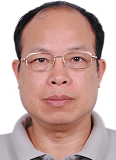
Prof. Yonghong Tan
The college of Information, Mechanical and Electrical Engineering,Shanghai Normal University, China
Research Areas:
1. Measurement, modeling and control of precision mechatronic systems, especially for multi-dimensional precision positioning stages with piezoelectric actuators.
2. Real-time identification, filtering and control of non-smooth dynamic systems, especially for mechanical systems with saturation, dead zone, backlash or hysteresis.
3. Biomedical measurement, signal processing and pattern recognition.
Personal Webpage: Click
Speech Title
Modeling & Control of MEMS Scanning Micromirrors
Abstract:
MEMS micromirrors are integrated micro-electro-opto-mechanical-systems chips composed of mirror plate, driving mechanism and deflection mechanism. The micromirror chips are usually used as actuators to tune optical paths in precision electro-optical instrument and devices. Although micromirrors are micro/nano chips, they are actually complex dynamic systems. Based on of the MEMS micromirrors driven by electromagnetic mechanism, the talk to be addressed will focus on the modeling and control strategies used for angle tuning of micromirrors. The expectation of the research topics in the future will also be presented.